Bach Flower Remedies and Astrological Alignment.

Bach Flower Remedies are a system of 38 plant-based remedies developed in the 1930s by Edward Bach.They’re designed to support emotional balance, based on the idea that emotional harmony supports overall wellbeing.

They are gentle, non-habit forming, and usually taken as drops in water.

Bach flower remedies aren’t traditionally linked to astrology, but many modern holistic practitioners like to pair emotional patterns (from astrology) with specific remedies from Edward Bach’s system.

Below is a commonly used intuitive pairing of zodiac signs with Bach flower remedies, based on emotional tendencies of each sign.

Note:

Bach remedies are chosen based on current emotional state, not sun sign alone. According to Edward Bach, treatment should match how you feel right now, regardless of astrology.

Aries

Traits: Impatient, impulsive, intense
Remedies:

  • Impatiens – for impatience and irritability
  • Cherry Plum – for fear of losing control

Taurus

Traits: Stubborn, resistant to change
Remedies:

  • Gentian – for discouragement
  • Walnut – for adapting to change

 Gemini

Traits: Indecisive, mentally scattered
Remedies:

  • Scleranthus – for indecision
  • White Chestnut – for racing thoughts

Cancer

Traits: Sensitive, clingy, nostalgic
Remedies:

  • Chicory – for possessiveness
  • Honeysuckle – for living in the past

Leo

Traits: Proud, attention-seeking
Remedies:

  • Vine – for dominance
  • Heather – for self-centeredness

 Virgo

Traits: Critical, perfectionist
Remedies:

  • Beech – for intolerance
  • Crab Apple – for self-criticism

Libra

Traits: People-pleasing, indecisive
Remedies:

  • Scleranthus – for wavering
  • Centaury – for difficulty saying no

Scorpio

Traits: Intense, jealous, secretive
Remedies:

  • Holly – for jealousy and suspicion
  • Willow – for resentment

Traits: Restless, blunt, over-optimistic
Remedies:

Sagittarius

  • Vervain – for over-enthusiasm
  • Agrimony – for hiding inner turmoil

Capricorn

Traits: Rigid, overly responsible
Remedies:

  • Rock Water – for self-denial
  • Oak – for overworking

Aquarius

Traits: Detached, rebellious
Remedies:

  • Water Violet – for emotional distance
  • Impatiens – for impatience with others

Pisces

Traits: Escapist, overly sensitive
Remedies:

  • Clematis – for dreaminess
  • Aspen – for vague fears


The 38 Bach Remedies (Grouped by Emotional State)

Dr. Bach grouped them into 7 emotional categories:

 Fear

  • Rock Rose – terror, panic
  • Mimulus – known fears (spiders, illness, etc.)
  • Cherry Plum – fear of losing control
  • Aspen – vague anxiety, unknown fears
  • Red Chestnut – excessive worry for loved ones

Uncertainty

  • Cerato – self-doubt
  • Scleranthus – indecision
  • Gentian – discouragement
  • Gorse – hopelessness
  • Hornbeam – mental fatigue
  • Wild Oat – uncertainty about life direction

Not Present / Preoccupied

  • Clematis – daydreaming
  • Honeysuckle – living in the past
  • Wild Rose – resignation
  • Olive – exhaustion
  • White Chestnut – repetitive thoughts
  • Mustard – sudden deep gloom
  • Chestnut Bud – repeating mistakes

Loneliness

  • Water Violet – aloofness
  • Impatiens – irritability
  • Heather – self-absorption

Oversensitivity

  • Agrimony – hiding distress behind cheerfulness
  • Centaury – difficulty saying no
  • Walnut – protection during change
  • Holly – jealousy, anger

Despair / Discouragement

  • Larch – lack of confidence
  • Pine – guilt
  • Elm – overwhelmed by responsibility
  • Sweet Chestnut – extreme anguish
  • Star of Bethlehem – shock or trauma
  • Willow – resentment
  • Oak – overwork despite exhaustion
  • Crab Apple – self-disgust

Over-care for Others

  • Chicory – possessiveness
  • Vervain – over-enthusiasm
  • Vine – dominance
  • Beech – intolerance
  • Rock Water – self-rigidity

Rescue Remedy

A famous blend created by Dr. Bach for acute stress.
Contains:

  • Rock Rose
  • Impatiens
  • Clematis
  • Star of Bethlehem
  • Cherry Plum

Often used during emotional shock or stressful situations.

How They’re Taken

  • Usually 4 drops, 4 times daily
  • Can combine up to 7 remedies in one mix
  • Added to water or taken directly

Why the Link Makes Sense Symbolically

Both Systems Focus on Emotional Patterns

  • Bach remedies treat temporary emotional states (fear, resentment, indecision).
  • Astrology describes recurring personality patterns and emotional tendencies (from Sun, Moon, rising, etc.).

So the bridge is this:

Astrology shows your default emotional wiring.
Bach remedies support when that wiring is out of balance.

Signs Reflect Core Emotional Imbalances

Each zodiac sign has shadow expressions. Bach remedies match those shadow states.

For example:

  • Aries shadow = impatience, explosive reactions
    Impatiens or Cherry Plum
  • Virgo shadow = self-criticism, perfectionism
    Crab Apple or Beech
  • Scorpio shadow = jealousy, suspicion
    Holly or Willow

The remedy isn’t for being the sign — it’s for when the sign’s energy becomes distorted.

Astrology = Blueprint

Bach Remedies = Emotional First Aid

You can think of it like this:

  • Astrology maps your psychological landscape.
  • Bach remedies are tools you use when certain terrains become overwhelming.

For example:

  • A Capricorn Moon person may often push themselves too hard.
  • During burnout, Oak or Elm might help restore balance.

A More Advanced Way to Link Them

Rather than matching by Sun sign alone, practitioners sometimes match remedies to:

  • Moon sign → emotional coping style
  • Mars → anger & drive patterns
  • Saturn → fear and restriction
  • Neptune → escapism tendencies

Example:

  • Strong Neptune or Pisces influence → tendency to drift or escape
    Clematis (grounding)
  • Heavy Saturn influence → self-pressure
    Rock Water

This is more psychologically accurate than simple “Aries = Impatiens” style matching.

Important Clarification

Dr. Bach believed remedies should be chosen based on:

“The mood of the moment.”

So astrology can:
✔ Help predict emotional tendencies
✔ Help anticipate stress patterns
✔ Offer insight into recurring themes

But the remedy is still chosen according to how you feel right now, not your birth chart alone.

 In Simple Terms

Astrology explains:

  • Why you tend to react a certain way.

Bach remedies help:

  • When that reaction becomes emotionally imbalanced.
The Power of Herbs for Emotional Wellbeing

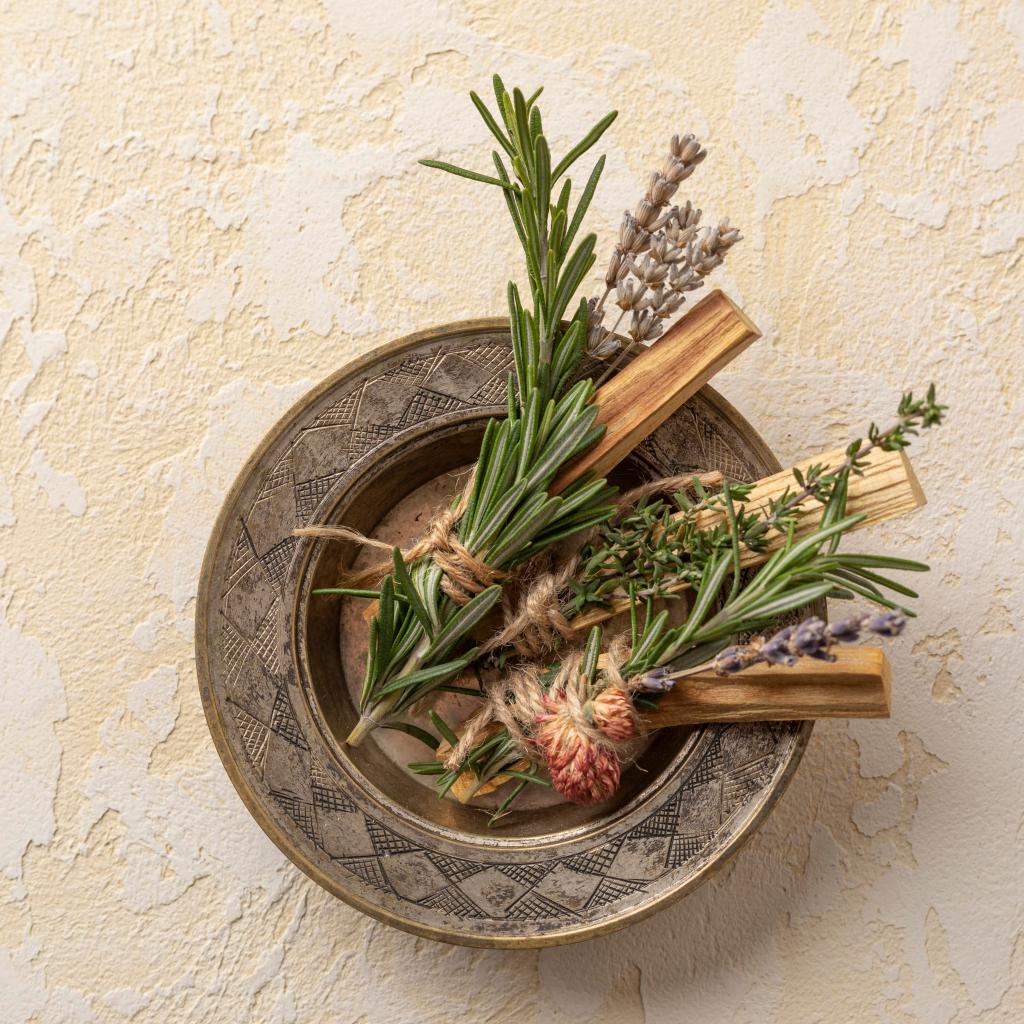
For centuries, herbs have been trusted allies in supporting the human spirit. Long before modern psychology gave language to stress, grief, overwhelm, or emotional fatigue, people turned to plants for comfort, steadiness, and renewal. Across cultures and traditions, herbs were understood not only as physical remedies, but as gentle balancers of the heart and mind.

Emotional wellbeing is not about suppressing feelings or striving for constant positivity. It is about resilience — the ability to move through life’s changes with steadiness, clarity, and self-trust. Herbs support this process by working in harmony with the body’s natural rhythms. Many calming plants help soothe the nervous system when it is overstimulated. Others uplift when energy feels heavy or stagnant. Some strengthen our inner boundaries during times of transition or vulnerability.

What makes herbs so powerful is their subtlety. They do not override the body’s intelligence; they collaborate with it. Their action is cumulative, supportive, and deeply respectful of individual experience. When used intentionally, herbs can help soften anxiety, ease tension, brighten low moods, and create space for emotional processing.

Working with herbs is also an invitation to reconnect — with nature, with seasonal cycles, and with ourselves. The simple ritual of preparing a tea, taking a tincture, or using a flower essence becomes a moment of pause. In that pause, the nervous system begins to settle, awareness deepens, and healing can unfold.

Herbal support for emotional wellbeing is not a replacement for professional care when it is needed. Rather, it is a complementary path — one that honours the wisdom of the earth and the innate capacity of each person to restore balance.

In a world that moves quickly and demands much, herbs offer something rare: gentleness, steadiness, and the quiet reminder that healing can be both natural and deeply nourishing.

Shedding : The Art of Letting Go

There comes a point in every life when holding on starts to feel heavier than letting go.

We don’t always notice it right away. It shows up quietly – in exhaustion that sleep doesn’t fix, in a tight chest when you think about the future, in the sense that you’re performing a version of yourself that no longer fits. That’s usually the moment your soul is asking for a shedding season.

Shedding isn’t failure. It’s not giving up. And it isn’t abandonment. It’s a natural, necessary part of growth that comes from understanding that we have outgrown what no longer serves.

Just like trees don’t cling to dead leaves through winter, we’re not meant to carry outdated identities, relationships, beliefs, or rhythms forever. Letting go creates space. And space is where breath returns.

Why Letting Go Is Spiritually Essential

Spiritually, shedding is an act of trust. It’s a purge of all things weighing heavy on our soul. And it is saying : I don’t need to know exactly who I’m becoming to release who I once was.
It’s allowing yourself to be held by the unknown instead of holding tight to what is familiar.

Most spiritual traditions speak about emptiness as sacred. Not because nothing matters – but because emptiness makes room for truth. When you let go of what no longer aligns, you’re not losing yourself. You’re clearing the noise so your deeper self can speak again.

Reinvention doesn’t happen through force. It happens through surrender.

When you stop clinging, intuition gets louder. Alignment becomes easier. Life feels less like resistance and more like response. Clarity is granted and the pieces fall into place.

The Psychology of Shedding: Your Nervous System Needs It

From a psychological perspective, holding on is exhausting.

Our brains are wired to seek safety in familiarity – even when that familiarity is stressful. Old patterns, roles, and coping mechanisms once protected us. But when they’re no longer needed, they quietly turn into sources of anxiety and burnout. Old patterns can create the opposite effect of what we are seeking as they are a signal to change what is no longer serving us.

Letting go gives your nervous system permission to stand down.

When you pause, breathe, and release expectations, your body shifts out of survival mode. Cortisol levels drop. Mental clarity improves. You’re no longer reacting -you’re choosing. And you are do so through peace.

This is why time and space are so powerful. They interrupt autopilot. They allow your mind to reorganize itself around who you are now, not who you had to be then. The old version of you is gone, behaviors and action changed, keeping intact the purity of your core or soul.

The Physical Body Knows Before the Mind Does

Physically, shedding shows up as relief.

Deep breaths become easier. Muscles soften. Sleep deepens. Digestion improves. You might even notice fewer headaches or a release of chronic tension. That’s not coincidence, it’s your body responding to emotional honesty.

The body carries what the mind avoids.

When you finally let go- of pressure, over-identification, or constant productivity, your body recognizes the safety in that choice. Rest becomes restorative instead of guilty. Stillness becomes healing instead of uncomfortable.

Allowing Time to Breathe Is an Act of Self-Respect

We live in a culture that glorifies constant motion. But growth doesn’t only happen in expansion- it happens in pause.

Across  other cultures shaped by rural life and contemplative traditions, slow breathing is understood spiritually as communion with a larger order and these philosphies and practices can still be practiced today, even from an urban perspective: in Japan, kokyū joins iki (breath/life) with mindful presence in Zen, tea ritual, and agrarian stillness; in India, prāṇa (from an, “to breathe, to live”) is the sacred life-wind moving between body and cosmos in yogic and Ayurvedic philosophy; in China, (氣), meaning air, vapor, or breath, flows through Daoist cosmology and rural longevity practices as the pulse of heaven and earth; in ancient Greece, pneûma (πνεῦμα), from pnéō “to blow or breathe,” signified both breath and spirit, shaping Stoic and Hippocratic thought where calm breathing aligned the soul (psychē) with logos, the rational order of nature; Mediterranean village life and early Christian mysticism preserved this link through spiritus—breath as divine presence—while Indigenous and agrarian cultures worldwide treat breathing as a sacred rhythm shared with land and ancestors, revealing a shared philosophy in which slow breath becomes a spiritual act of remembering one’s place within the living world. Giving yourself time to breathe isn’t laziness. It’s integration.

It is letting lessons settle.
It is letting grief move through.
It is  letting joy find space to land.

In that breathing room, reinvention happens naturally. You don’t need to force a new identity or rush clarity. What’s meant to emerge will rise on its own, stronger and more aligned than anything you could plan.

Reinvention Is Gentle, Not Dramatic

True reinvention is quiet.

It feels like choosing differently.
It feels like saying no without guilt.
It feels like needing less external validation.
It feels like coming home to yourself.

And often, it starts with shedding—softly, intentionally, without apology.

Reinvention is gentle, not dramatic. True reinvention is quiet, almost imperceptible to the outside world. It does not announce itself through grand gestures or public declarations, but through a series of small, deliberate choices made in private. It feels like choosing differently when no one is watching. It feels like saying no without guilt, like loosening your dependence on external validation, like slowly remembering who you were before you learned to perform. At its core, reinvention is less about becoming someone new and more about returning—coming home to yourself through subtraction rather than accumulation.

Instructionally, this kind of change begins with shedding. Start with purging: remove objects, commitments, and digital noise that carry an outdated version of you. Culling is an act of discernment—asking what truly supports your life force and releasing what drains it. Establish quiet rituals to anchor the transition: morning breathing, evening reflection, seasonal resets that signal to the psyche that a threshold has been crossed. Even physical changes, such as mindful weight loss or simplifying how you eat and move, can function philosophically as symbols of lightness—proof that the body, too, can release what it has been holding. None of this requires force or urgency. Reinvention unfolds through patience, repetition, and honesty, until the excess is gone and what remains feels essential, unburdened, and deeply aligned with who you are becoming.

So if you’re in a season of letting go, trust it. You’re not falling behind. You’re making space.

And in that space, something truer is learning how to breathe!

The Soul is the Source of truth


The Soul as the Source

The soul is the original source of truth within you. Beyond learned beliefs, social conditioning, and external noise, there exists a deeper intelligence that already knows. This wisdom is not loud or forceful—it is subtle, steady, and unwavering. When you turn inward, the soul offers clarity that logic alone cannot provide.

Living from the soul means remembering who you are beneath expectations. It is a return to authenticity, where decisions are guided not by fear or obligation, but by resonance and inner knowing.

Practices to Connect with the Soul

  • Daily Stillness: Spend 5–10 minutes in silence each day with no agenda. Simply observe the breath and notice what arises.
  • Soul Journaling: Write without editing in response to prompts such as “What does my soul need right now?” or “What feels true for me today?”
  • Heart-Centered Breathing: Place one hand on your heart, inhale deeply, and imagine breath moving in and out of the heart space.

Intuition & Inner Guidance

Intuition is the voice of the soul in motion. It communicates through sensation, emotion, imagery, and sudden clarity. Often felt before it is understood, intuition invites you to trust what you sense rather than what you’ve been told to believe.

Strengthening inner guidance is a practice of listening and responding. Each time you honor intuitive nudges—no matter how small—you deepen your relationship with your inner compass and build trust in yourself.

Practices to Strengthen Intuition

  • Body Awareness Check-Ins: Ask simple yes/no questions and notice how your body responds—expansion or contraction, ease or tension.
  • Intuitive Decision Practice: Begin with low-risk choices (what to eat, when to rest) and consciously choose based on feeling rather than habit.
  • Nature Connection: Spend time in nature without distraction. Natural environments help quiet the mind and amplify intuitive awareness.

Energetic Alignment

Everything you experience—thoughts, emotions, actions—carries energy. Energetic alignment occurs when your inner state matches your values, truth, and intentions. When aligned, life feels more fluid, grounded, and meaningful. When misaligned, the body often signals through fatigue, restlessness, or emotional discomfort.

Alignment is not about perfection; it is about honesty. By acknowledging what feels off and gently realigning, you restore balance and flow.

Practices for Energetic Alignment

  • Emotional Clearing: Name what you are feeling without judgment. Awareness itself begins the shift.
  • Energy Hygiene: Visualize releasing energy that is not yours at the end of each day. Imagine returning to your own energetic center.
  • Alignment Questions: Ask regularly: “Does this nourish me?” or “Is this in integrity with my truth?”

Sacred Rituals & Intention

Ritual transforms the ordinary into the sacred. Through intentional acts, you create space to honor yourself, your energy, and your connection to something greater. Rituals are not about complexity—they are about presence.

Intention directs energy. When intention is set consciously, your actions carry meaning, and your energy moves with purpose. Rituals anchor intention into the body and into daily life, making transformation sustainable rather than fleeting.

Sacred Ritual Practices

  • Morning Intention Setting: Begin the day by naming one quality you wish to embody (peace, courage, clarity).
  • Evening Release Ritual: Light a candle or take a few breaths to release the day and return to yourself.
  • Moon or Seasonal Rituals: Mark transitions with reflection, gratitude, and intention for what you are calling in or letting go of.
  • Personal Ceremony: Create rituals that feel uniquely yours—movement, prayer, sound, or stillness—all are valid when done with awareness.

Living in Alignment

When the soul leads, intuition guides, energy aligns, and ritual grounds intention, life becomes a conscious practice rather than a reaction. This path is not about becoming something new—it is about remembering, realigning, and returning home to yourself.

The Mind is a Tool of perception.

Mental hygiene & conscious thought

Clarity starts with what you let live rent-free in your mind.

Think of mental hygiene the way you think of physical hygiene: not perfection, just regular cleaning.

Core practices

  • Thought labeling: When a thought arises, gently name it: planning, remembering, judging, imagining. Labeling creates distance without suppression.
  • Input fasting: Be intentional about what you consume (news, social media, conversations). What you ingest becomes your inner voice.
  • Completion loops: Write down unfinished thoughts before sleep. The mind relaxes when it knows it won’t have to remember everything.

Inner shift

You are not responsible for every thought that appears—only for whether you keep entertaining it.


Meditation & nervous system regulation

Stillness isn’t a mental achievement—it’s a physiological state.

Before insight comes safety.

Regulation first, meditation second

  • Long exhales: Inhale 4, exhale 6–8. This directly tells your nervous system, we’re not in danger.
  • Orienting: Gently look around the room and name 3 neutral objects. This grounds you in the present moment.
  • Body-based awareness: Instead of focusing on the breath alone, notice physical sensations—weight, warmth, contact with the ground.

Meditation reframed

  • It’s not about stopping thoughts.
  • It’s about staying present while thoughts pass without activating threat responses.

Inner shift

Calm is not something you summon. It emerges when the body feels safe enough to rest.


Releasing inherited patterns

Not everything you carry belongs to you.

Some reactions are echoes—family systems, cultural survival strategies, unprocessed grief passed down silently.

Ways to loosen the grip

  • Pattern recognition: Ask, “When did I first see this modeled?” Awareness alone weakens inheritance.
  • Permission statements:
    • “This protected someone before me.”
    • “I’m allowed to choose differently now.”
  • Somatic release: Shaking, stretching, slow walking, humming—patterns live in the body as much as the mind.

Inner shift

Honoring your lineage does not require repeating its wounds.


Bringing it together

  • Mental hygiene clears the fog
  • Nervous system regulation creates the ground
  • Releasing inherited patterns frees energy for presence

Clarity isn’t sharp or rigid—it’s spacious.
Stillness isn’t empty—it’s alive.